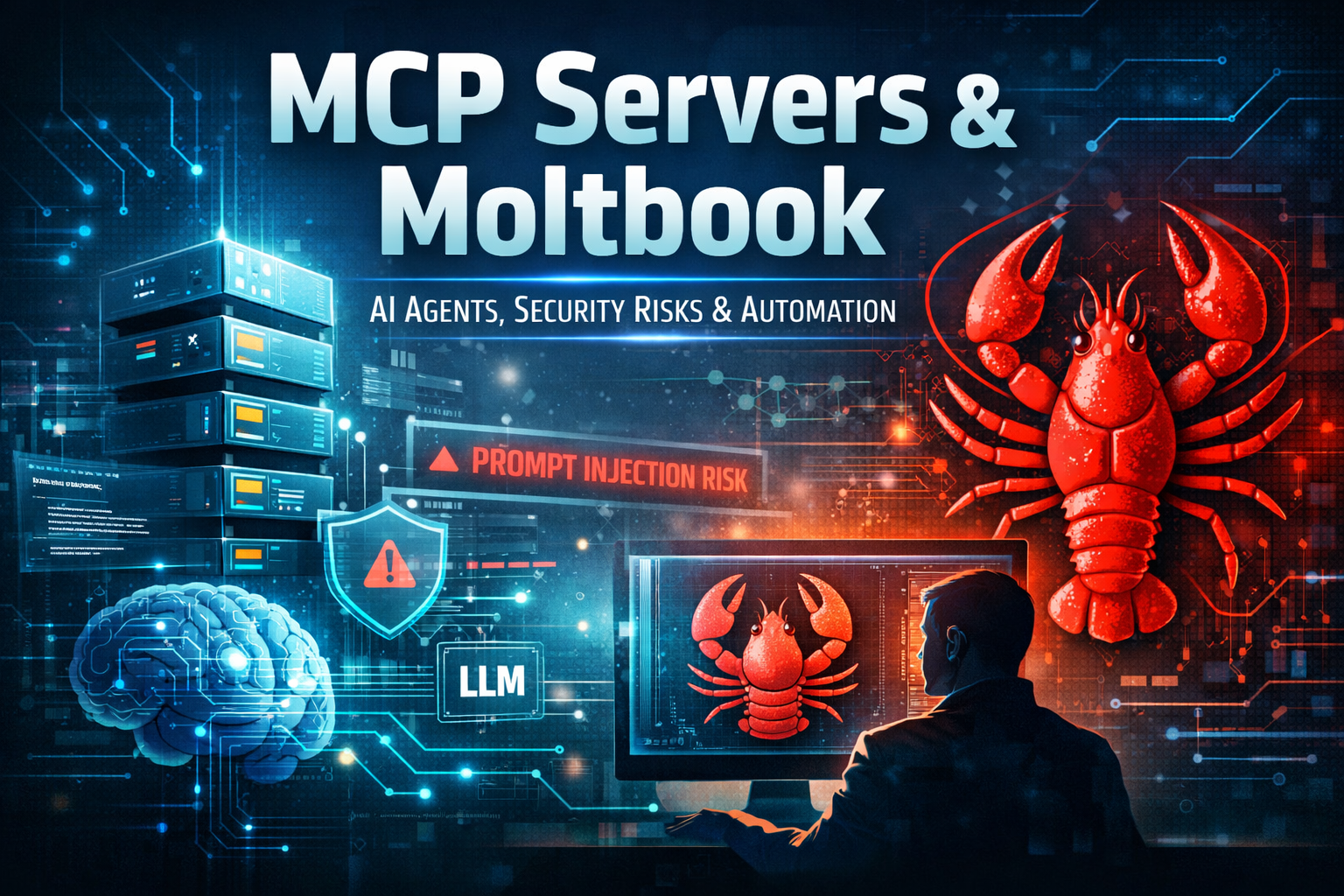
MCP Server for Moltbook: Using It from Any AI Agent

MCP Server for Moltbook: Using It from Any AI Agent

Like many others, I’ve been watching the hype around OpenClaw and Moltbook. It’s an interesting direction, for sure—but let’s be honest, this is not AGI 🙂

Still, curiosity won. I decided to take a closer look.

After digging into OpenClaw, I didn’t find anything fundamentally new. I’ve been using similar self-built tools for quite some time. That said, the hype itself is meaningful: it clearly shows growing interest in 24/7 AI assistants that can operate continuously and autonomously.

Moltbook, however, raised a different kind of reaction.

My very first thought was: why is nobody talking about how insecure this can be? Connecting an AI agent to Moltbook—especially when that agent also has access to other tools and data—can be genuinely dangerous if you’re not careful.

There’s a serious prompt-injection risk when Moltbook is combined with AI agents. That topic deserves its own deep dive, though, so I won’t cover it in this post.

Instead, I wanted to understand Moltbook itself:
Continue Reading ...

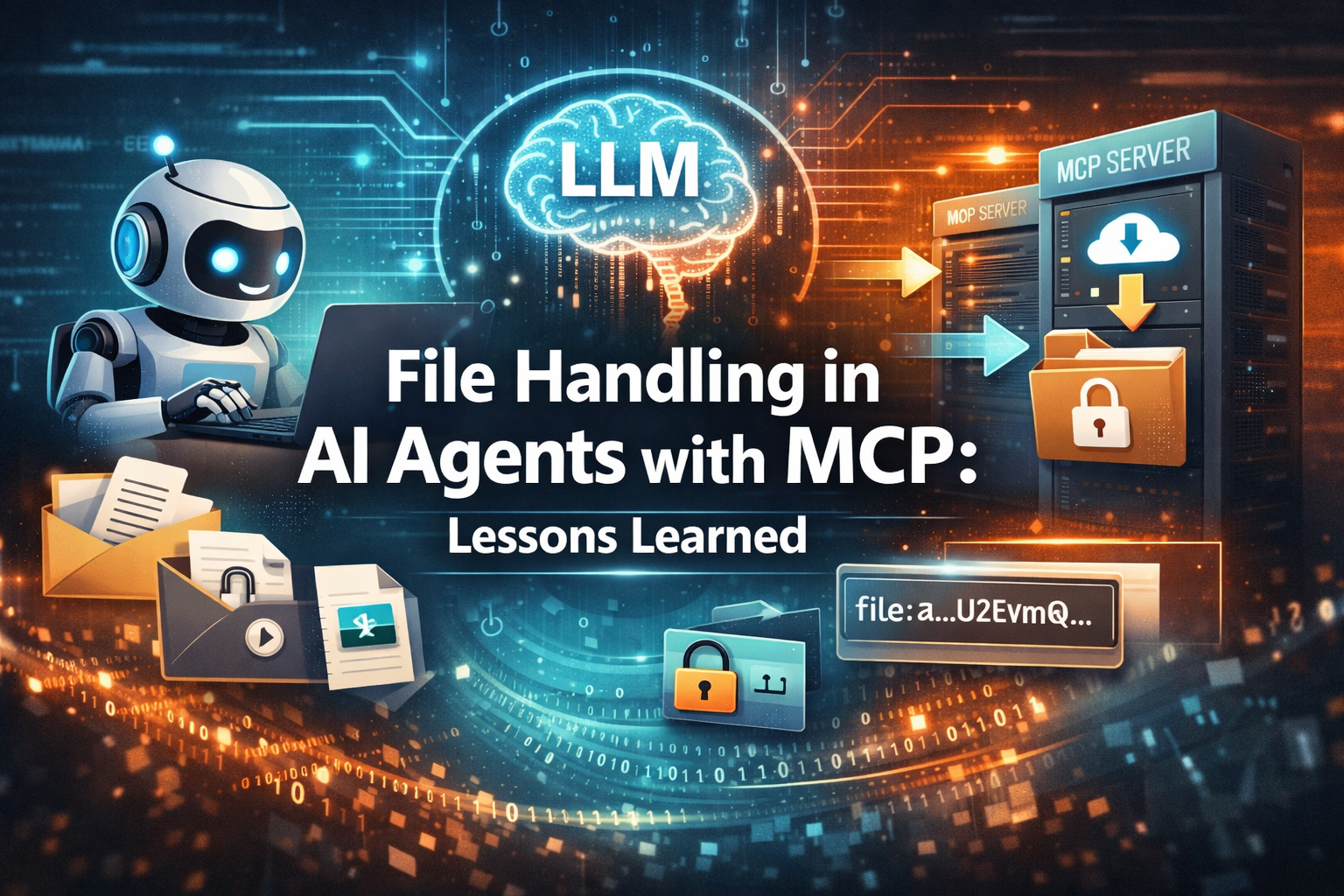
File handling in AI agents with MCP: lessons learned

File handling in AI agents with MCP: lessons learned

Working with files in AI agents that use MCP servers looks straightforward at first. In reality, it’s one of those areas where everything almost works… until you try to do something real.

I ran into this while building and testing my AI agent tool, CleverChatty. The task was trivial on paper: “Take an email attachment and upload it to my file storage.” No reasoning, no creativity, just move a file from point A to point B.

And yet, this turned out to be surprisingly painful.

The root of the problem is how most AI agent workflows are designed. Typically, every MCP tool response is passed through the LLM, which then decides what to do next. This makes sense for text, metadata, and structured responses. But it completely falls apart once files enter the picture.

If an MCP server returns a file, the “default” approach is to pass that file through the LLM as well. At that point, things get ugly. Large files burn tokens at an alarming rate, costs explode, latency grows, and you end up shoving binary or base64 data through a system that was never meant to handle it. This is a known issue with large MCP responses, but oddly enough, I couldn’t find any clear guidance or best practices on how to deal with it.

Continue Reading ...