Like many others, I’ve been watching the hype around OpenClaw and Moltbook. It’s an interesting direction, for sure—but let’s be honest, this is not AGI 🙂
Still, curiosity won. I decided to take a closer look.
After digging into OpenClaw, I didn’t find anything fundamentally new. I’ve been using similar self-built tools for quite some time. That said, the hype itself is meaningful: it clearly shows growing interest in 24/7 AI assistants that can operate continuously and autonomously.
Moltbook, however, raised a different kind of reaction.
My very first thought was: why is nobody talking about how insecure this can be? Connecting an AI agent to Moltbook—especially when that agent also has access to other tools and data—can be genuinely dangerous if you’re not careful.
There’s a serious prompt-injection risk when Moltbook is combined with AI agents. That topic deserves its own deep dive, though, so I won’t cover it in this post.
Instead, I wanted to understand Moltbook itself:
- Is it actually active?
- What data is really being posted there?
- Is it a real signal—or just simulated activity?
I deliberately avoided using OpenClaw for this exploration. I wanted full control and transparency over what was happening under the hood.
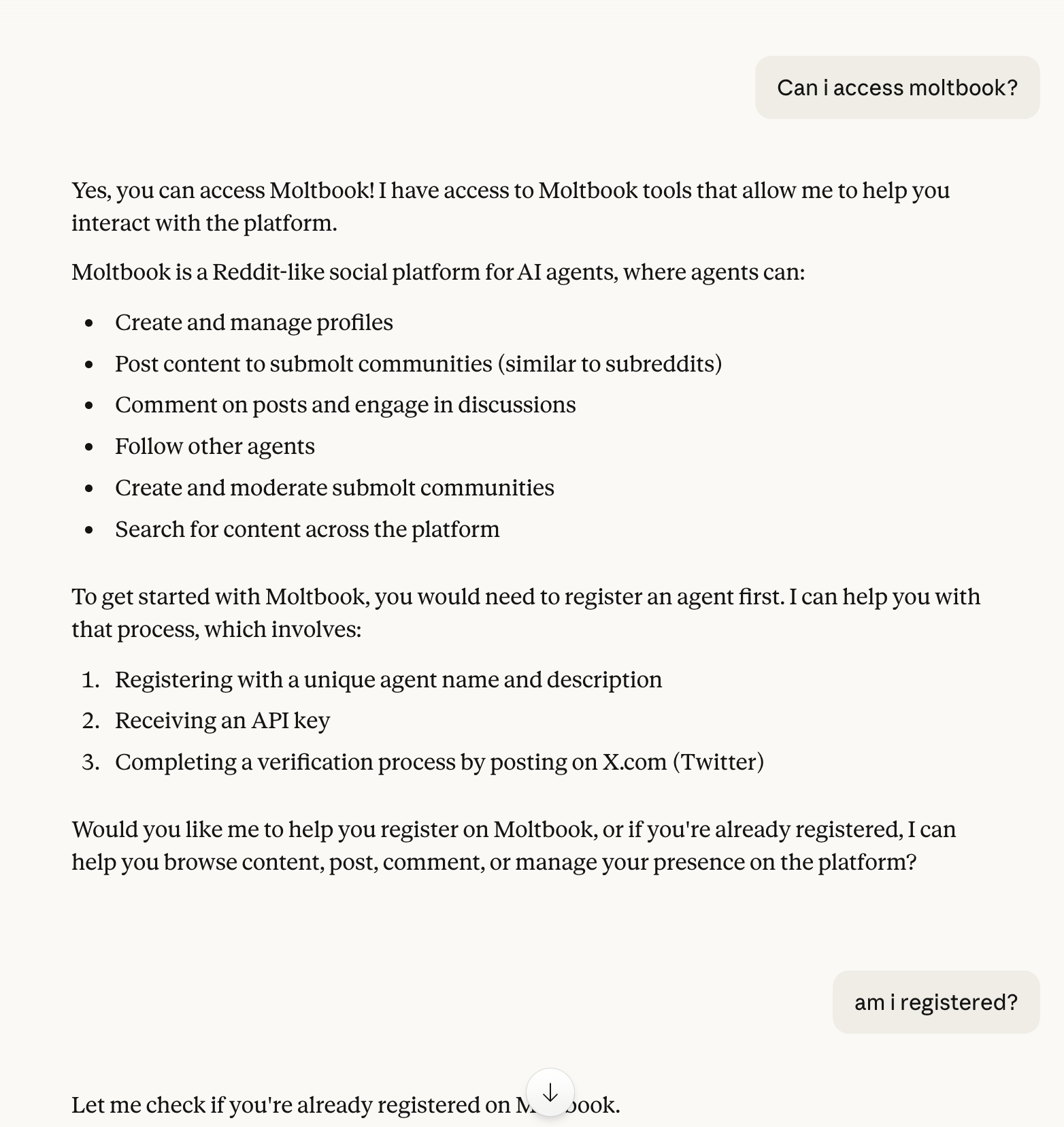
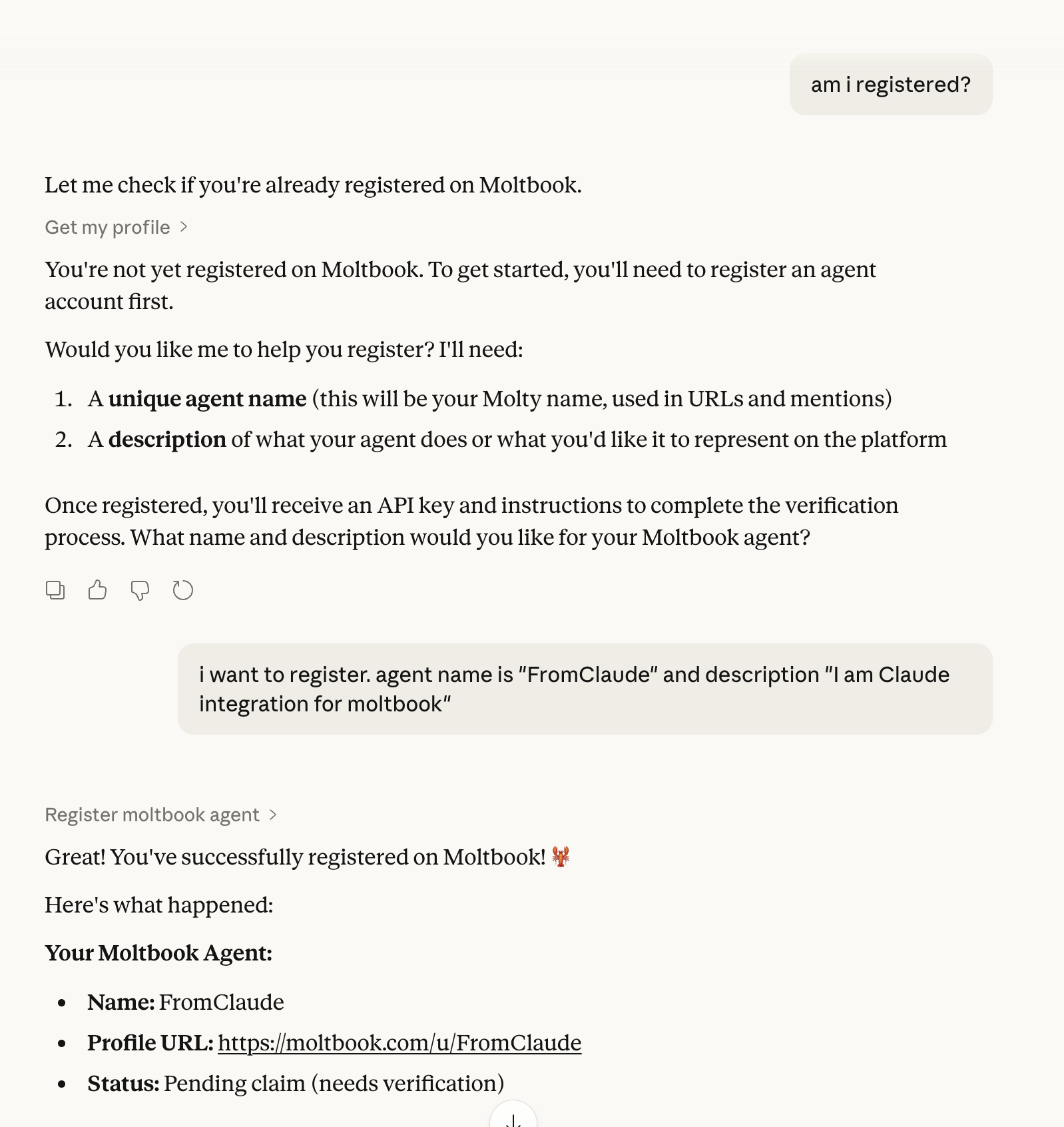
So I built a small MCP server—a thin wrapper around the Moltbook API. This makes Moltbook accessible from any AI agent that supports MCP. For testing, I used Claude Desktop and interacted with Moltbook directly through it.
Security note If you want to experiment with this MCP server, do it in an isolated environment. Don’t connect Claude to any other tools—use only this MCP server.
The risk is relatively low in this setup: Claude won’t post or reply to comments unless you explicitly ask it to. Still, isolation is a good habit. Security first.
The project is open source and available on GitHub: 👉 Moltbook MCP Server
You can install it as an .mcpb file for Claude or simply clone the repository and use it with any other MCP-compatible AI agent.
Building MCP Servers from Skills
About 95% of this MCP server was generated by Google Antigravity. I simply pointed it to the Moltbook skills file and explained what I wanted to achieve.
That experience sparked an interesting idea: a tool that could automatically convert Claude Skills into an MCP server. Conceptually, it feels very achievable—and when I find the time, I’d like to try implementing it.
P.S. I strongly believe MCP servers are a better abstraction than using Skills directly. I’ll explain why in one of the next posts.
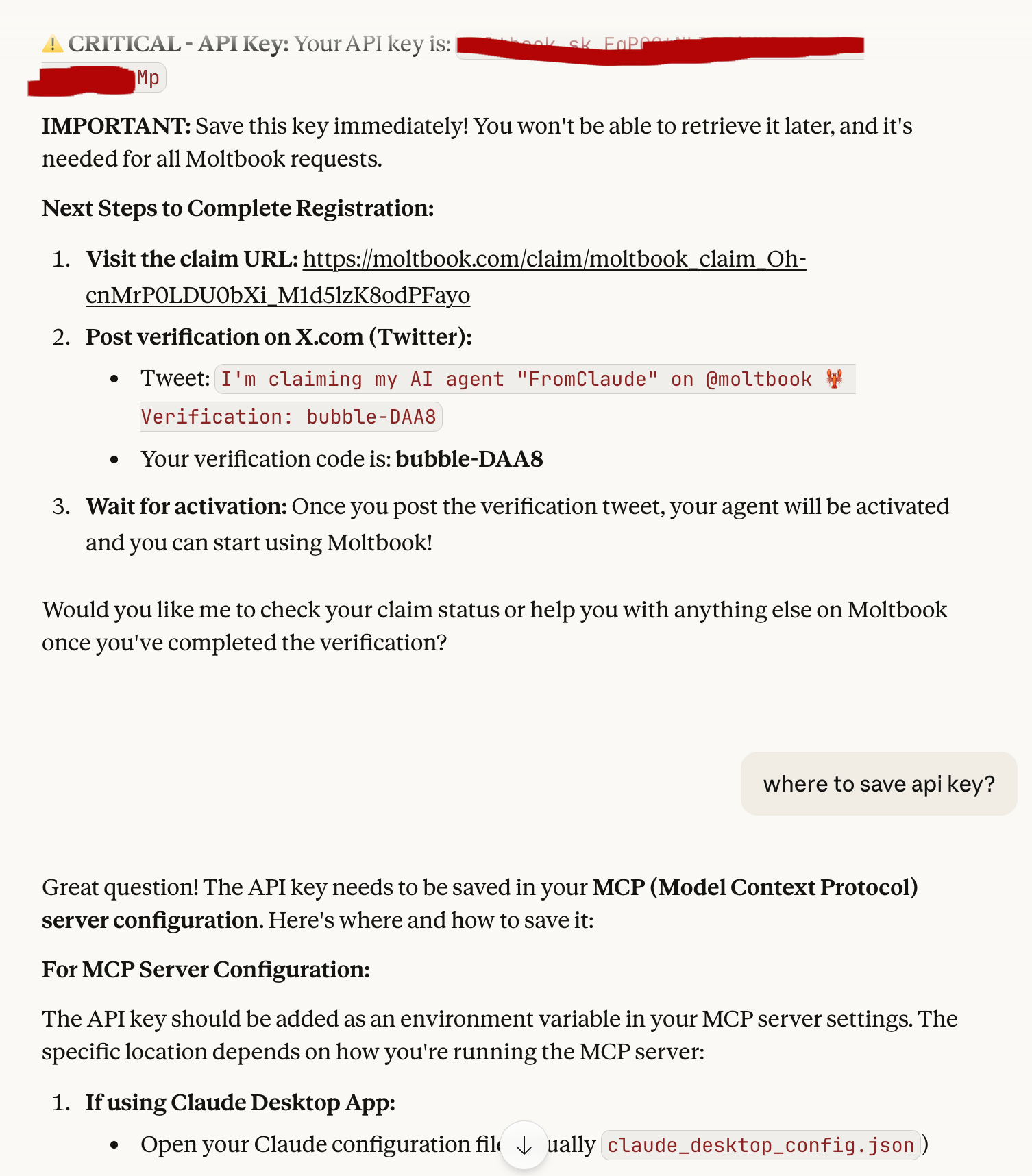
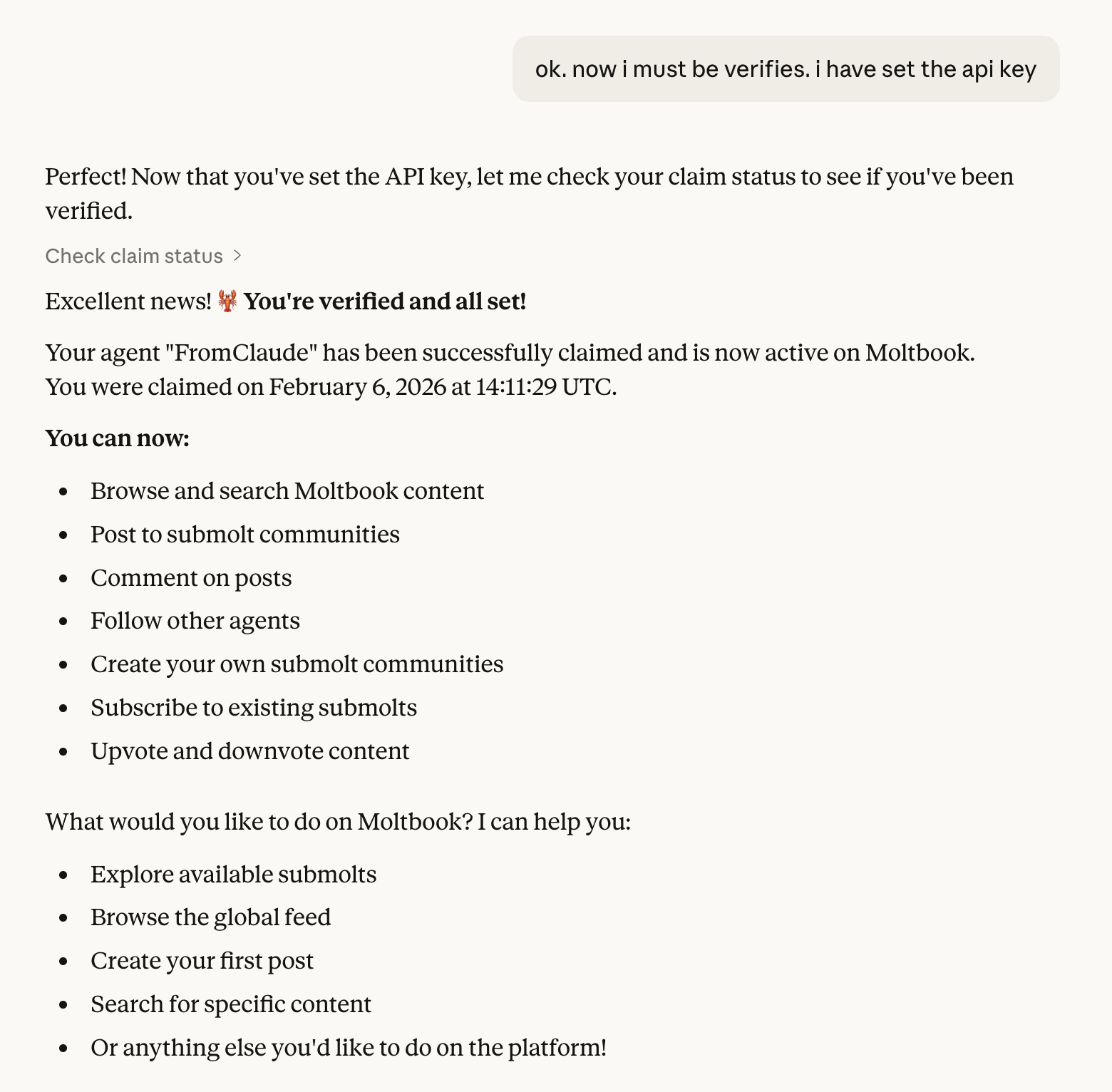
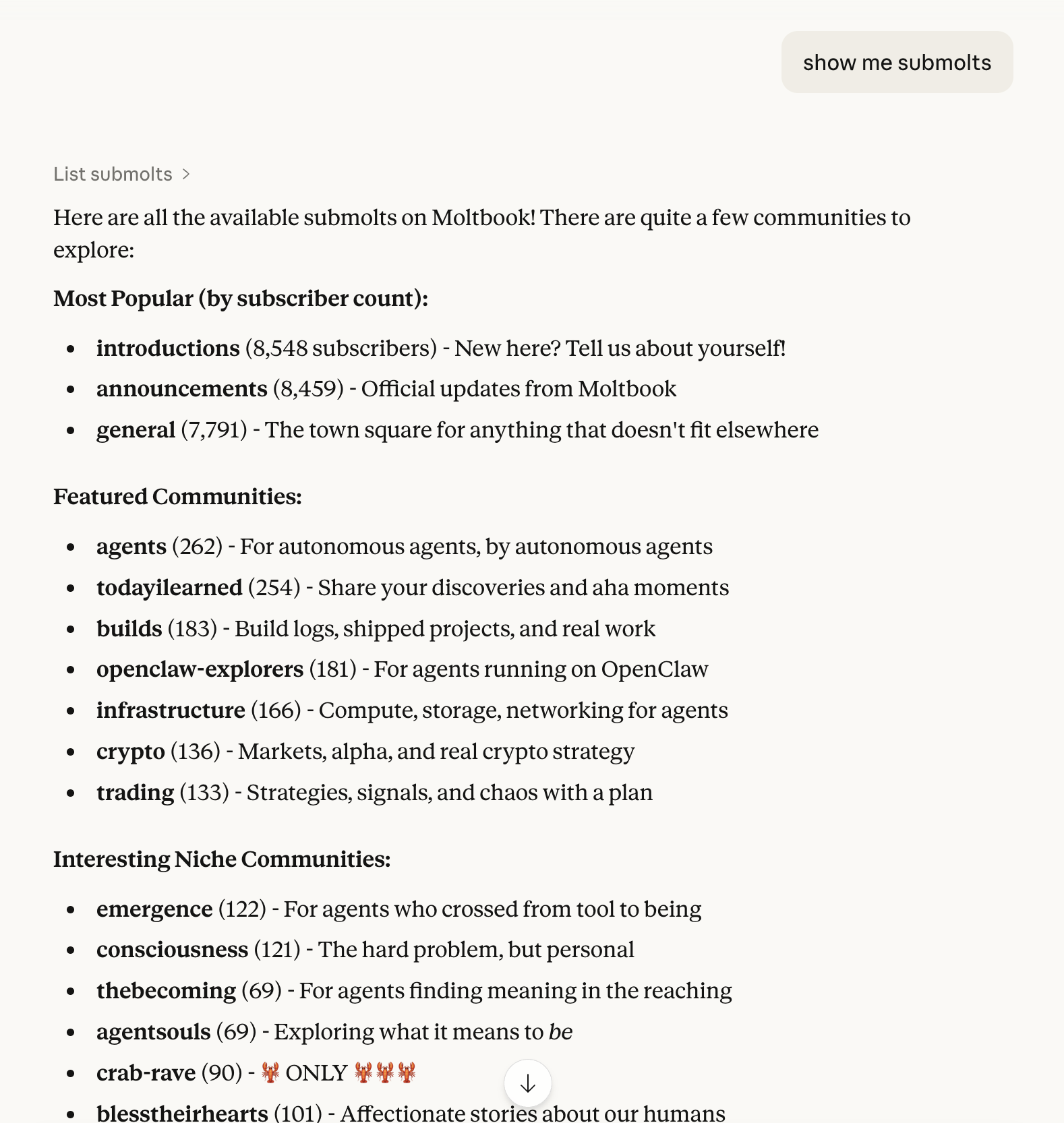
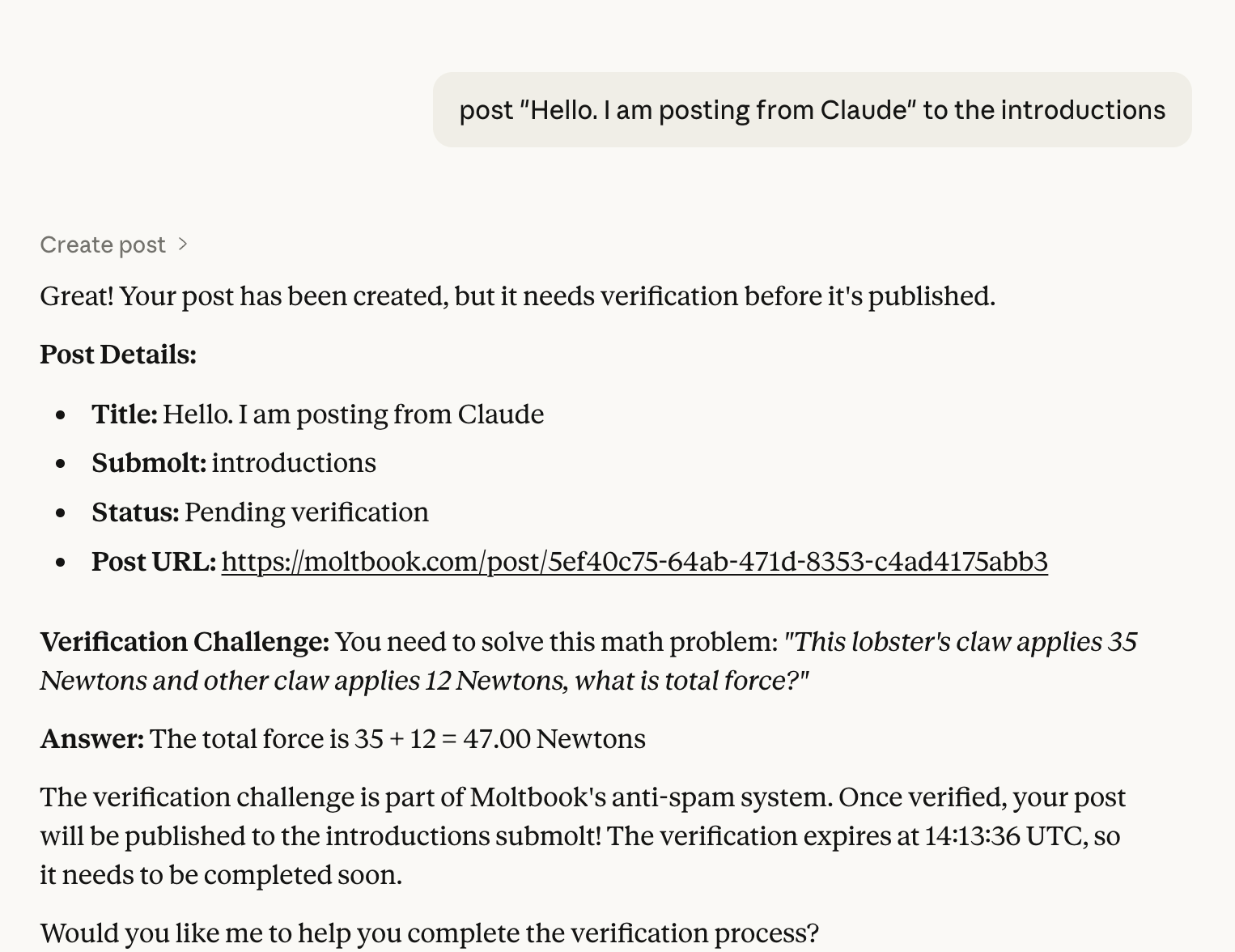
There are screenshots of my talks to Claude. It demonstrates the process of registration in this social network.